The Icarus myth itself is a paradigm. A myth can serve as an instructive method for advancing self-knowledge and inner growth. Icarus wanted to use his artistic gift to fascinate others and, like Icarus, to have the upper hand to become God. He wanted to overcome everything, including himself. Underestimating a person's physical limitations brings him down. Icarus' rehearsing of the leap to soar up to God himself was not to please the spectators but to show himself. The irrational desire to surpass the artistic achievements of his parents leads him to ruin. An unprepared body exceeds its physical limits and betrays the vain, full of vanity, young artist. The life tragedy of this young artist is reminiscent of the unforgettable acting genius Vaclav Nijinsky, a victim of both internal and external circumstances. They are "God's clowns". Ikar confesses his life story to the nurse who takes care of him after the accident. This content was for those who believe in facts. However, this story is a metaphor full of symbols, a tribute to art created from aesthetics, emotions and artistry, which does not leave out racio because how else would such a synergy be created. The author has a certain conception that during the creation, in direct contact with the players who are not only objects for the realization of the work, but creative artists, changes according to the current inspiration created by that contact. Pekić's great novella served as a stimulating idea to create a new play, because the writer has the word and the choreographer the movement.
EN
Person(s) / Collective:
Katarina Stojkov Slijepčević
Title:Victims of illusion
Subtitle:Based on the motifs of the novella "Uspenje i sunovrat Ikara Gubelkijana" by Borislav Pekić
Date of Premiere: 2014
Co-production:
Bitef dance company
choreographer:
Katarina Stojkov Slijepčević
set designer:
Katarina Stojkov Slijepčević
costume designer:
Katarina Stojkov Slijepčević
costume making:
Vittoria Faso
composer:
Aleksandra Djokić
video:
Branko Slijepčević
dancer:
Ricardo Campos Freire
dancer:
Ana Ignjatović
dancer:
Vladimir Čubrilo
dancer:
Nataša Gvozdenović
Ballet pedagogue :
Isidora Stanišić
photographer:
Vladimir Sretenović
design:
Vladimir Sretenović
organizer:
Jovana Janjić
technical director:
Ljubomir Radivojević
sound designer:
Miroljub Vladić, Nikola Marjanović
lighting designer:
Dragan Djurković, Milan Nedić
stage manager :
Maja Jovanović
technician:
Goran Gavrančić, Aleksandar Marinković, Vladimir Milosevic
wardrobe mistress:
Marta Narančić
Synopsis
Media
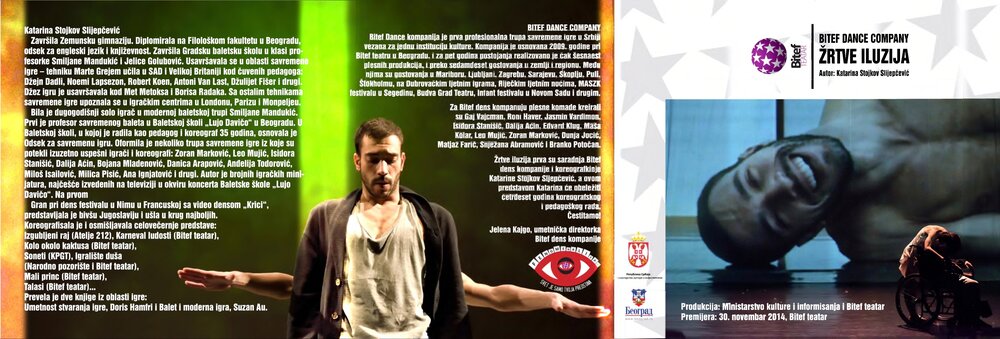
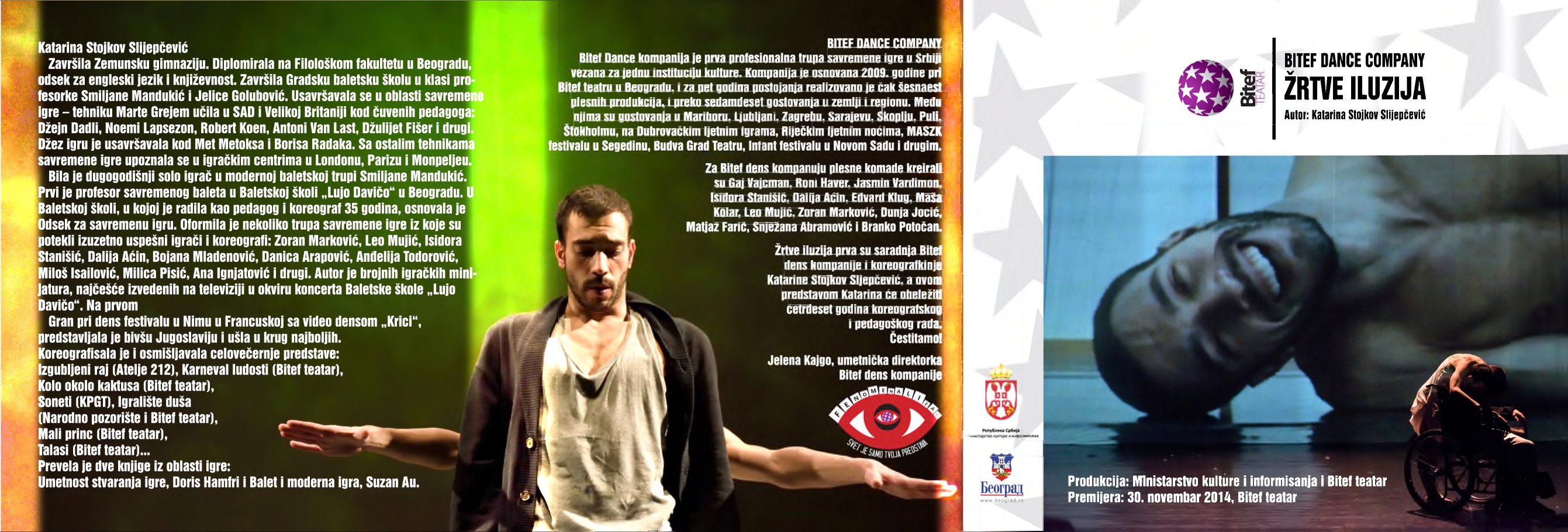
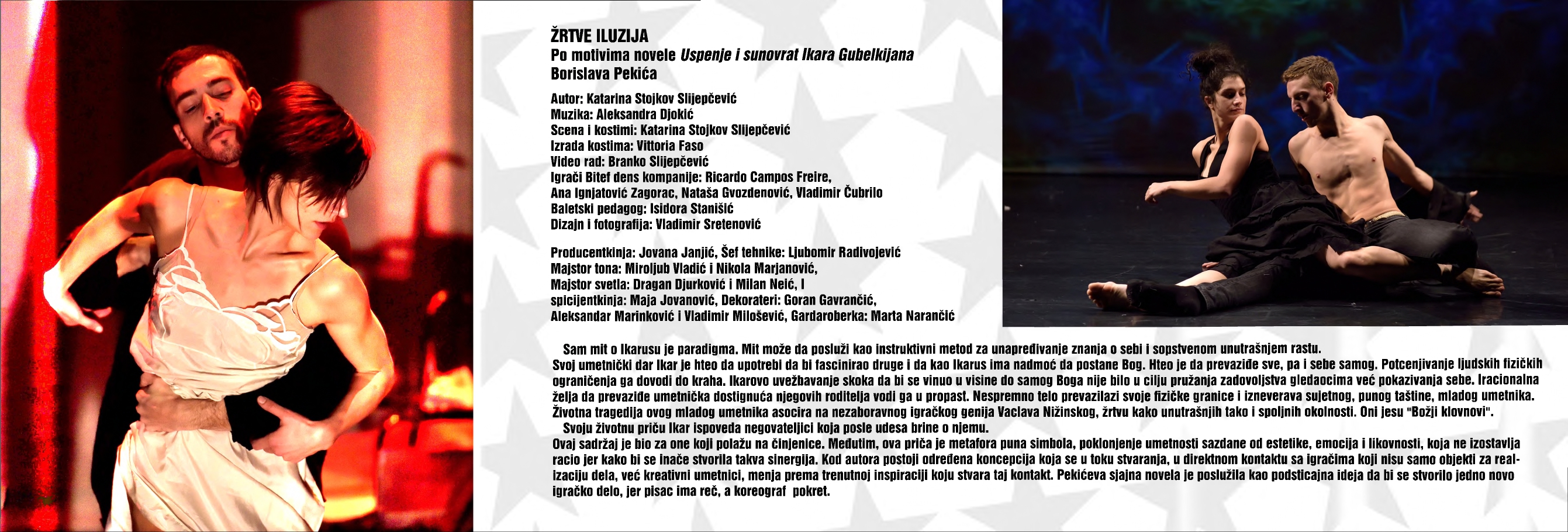
Victims of illusions programme / 2 items
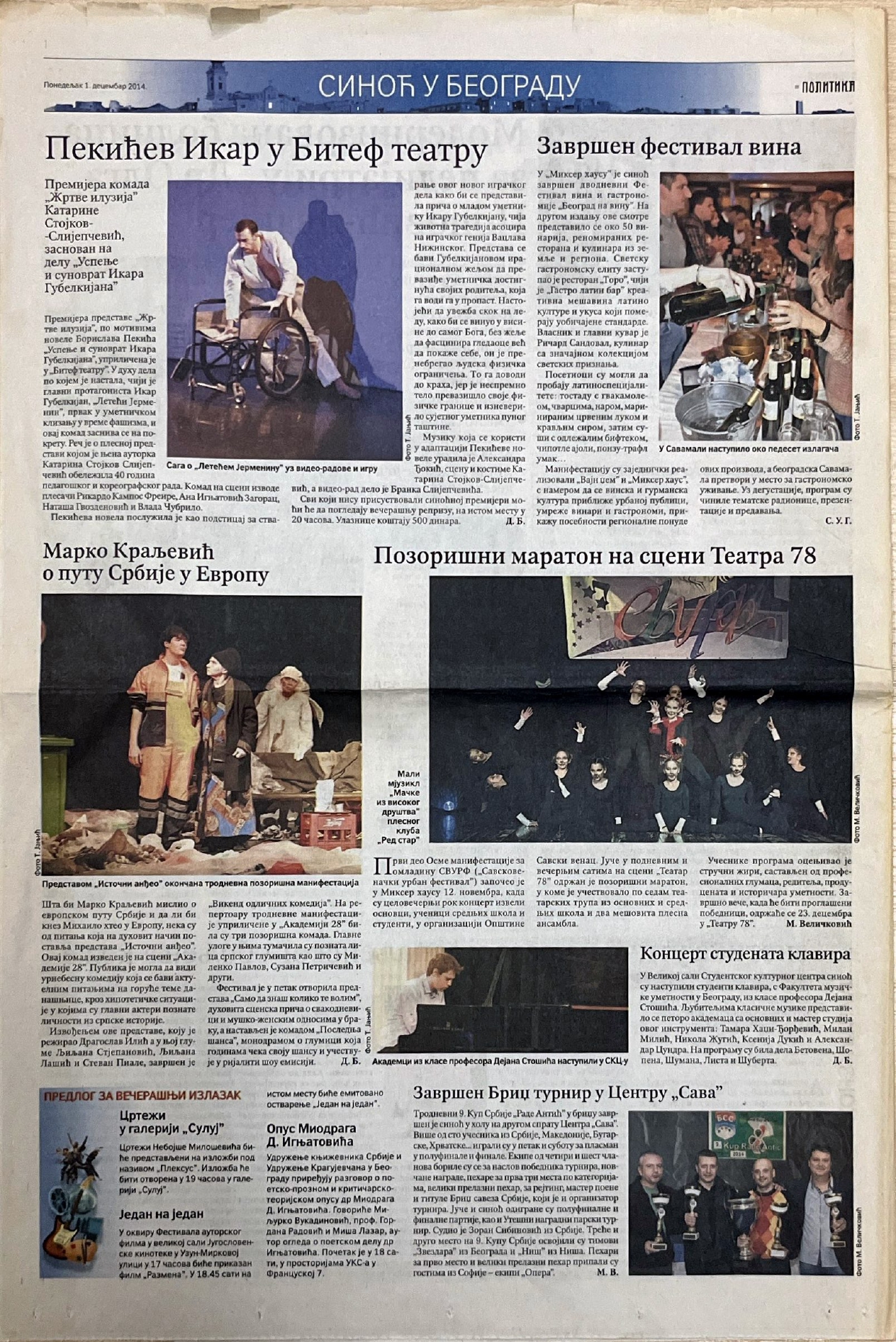
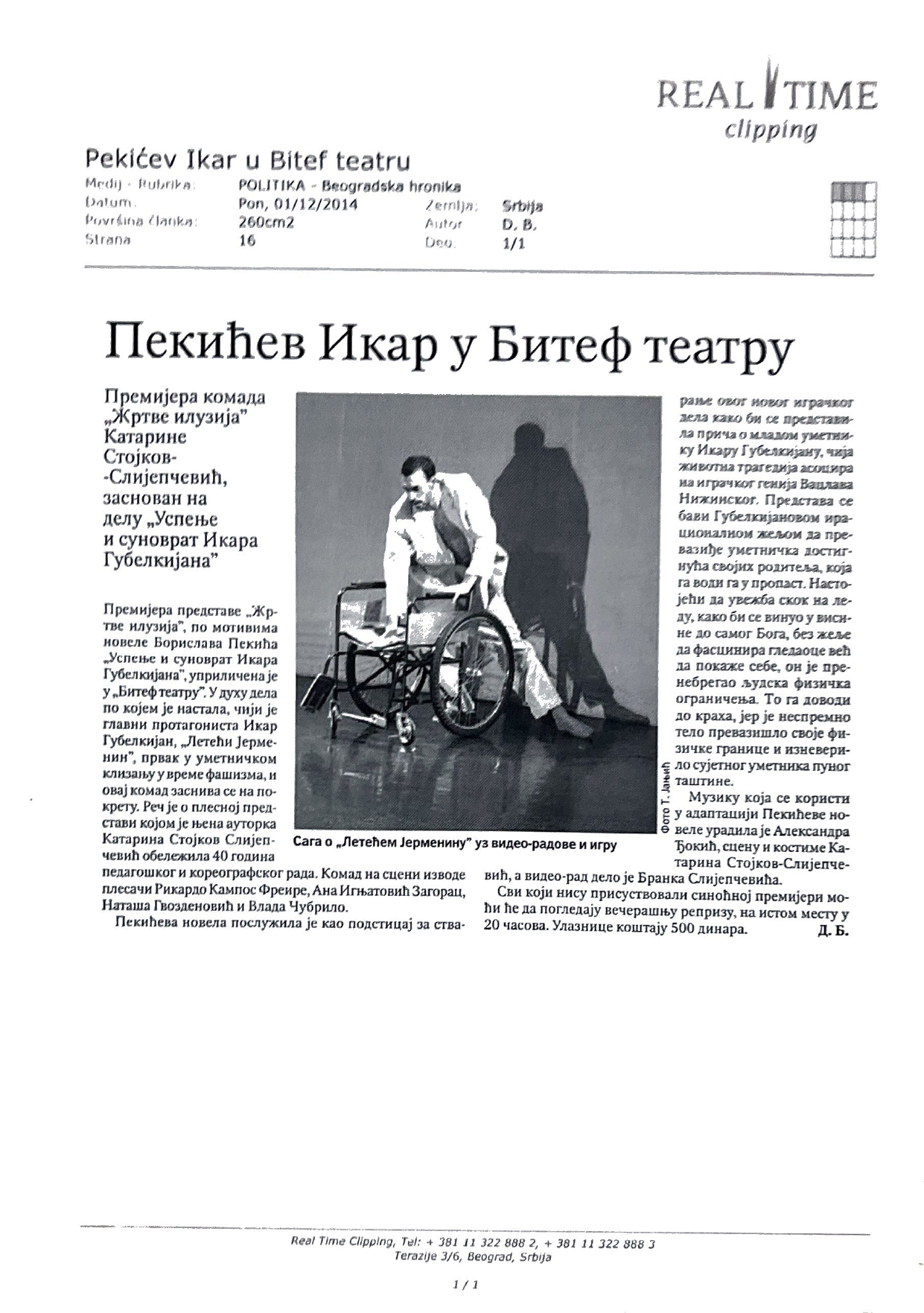
Victims of illusions critics / 3 items