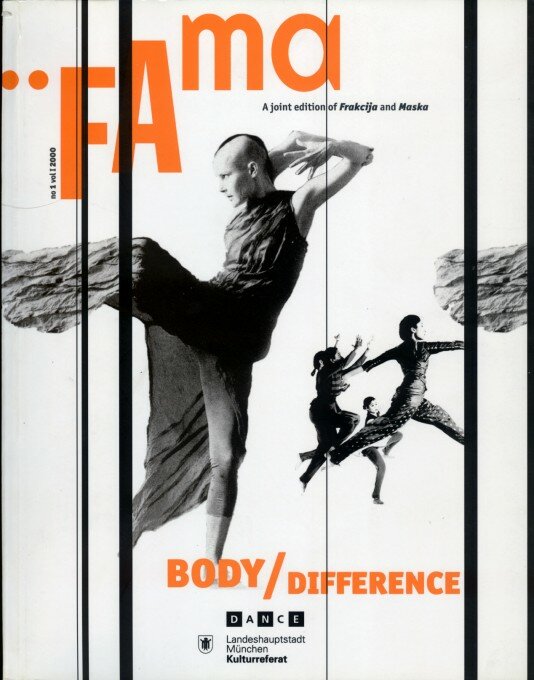
In the 1990s, the new performing art practices generated the need for new discourses, theorizations, and genres of writing about them. The developments in the field of theory offered new possibilities for criticism, theory, and essayism as well as possible new discursive possibilities in the field. Three magazines and their circles started to collaborate extensively in the field of performing arts theory in the late 1990s and in the first decade of the 2000s: Maska, Performing Arts Journal (established in 1920, published for one year and again regularly from 1985 onward), Frakcija Performing Arts Journal (1995–2015), and TkH, Journal for Performing Arts Theory (2001–2016) by theoretical-artistic platform Walking Theory (Teorija koja Hoda – TkH). The bilingual issues of the magazines became internationally well-established and supplied theoretical aspects not only for the cultural contexts of the former Yugoslav states but also internationally. Contemporary dance theory and history was one of their most vivid theoretical fields and one of the most important parts of their international contribution. In these journals practitioners and theorists worked together, assuring the vibrant link between practice and theory. These journals served as a platform for the formation of several very important theoreticians and scholars including Bojana Kunst, Bojana Cvejić, Ana Vujanović, Goran Sergej Pristaš, Aldo Milohnić, Janez Janša (Emil Hrvatin), among others.
From Nika Arhar, Jasmina Založnik (ed.), Bodies of Dance, Aspects of Dance as Cultural, Political, and Art Work in Yugoslavia and After (Belgrade, 2024)

