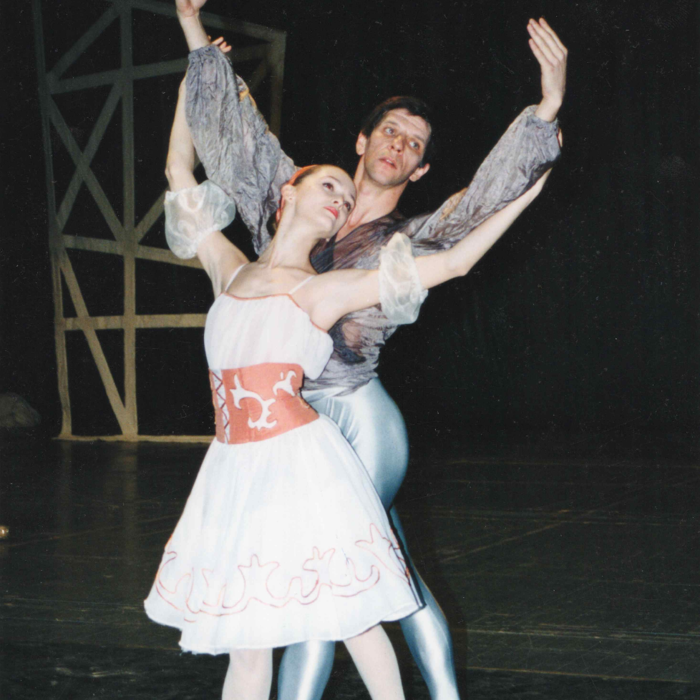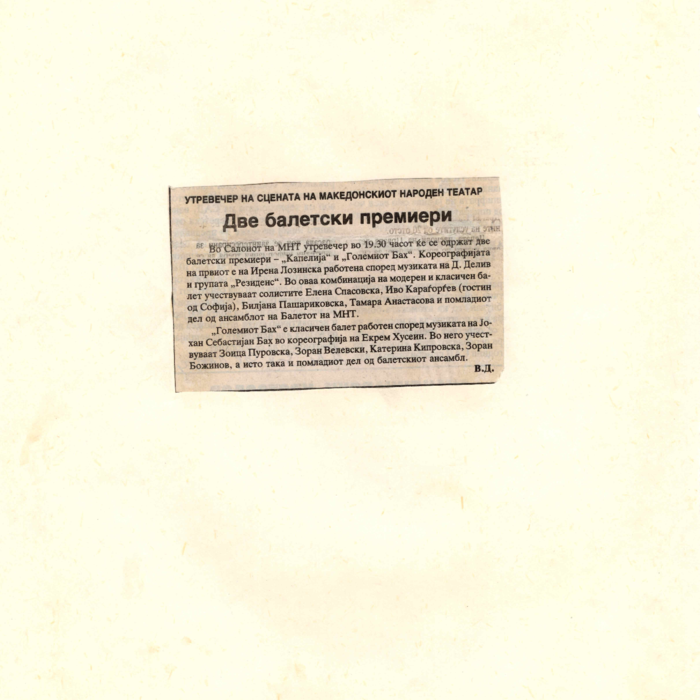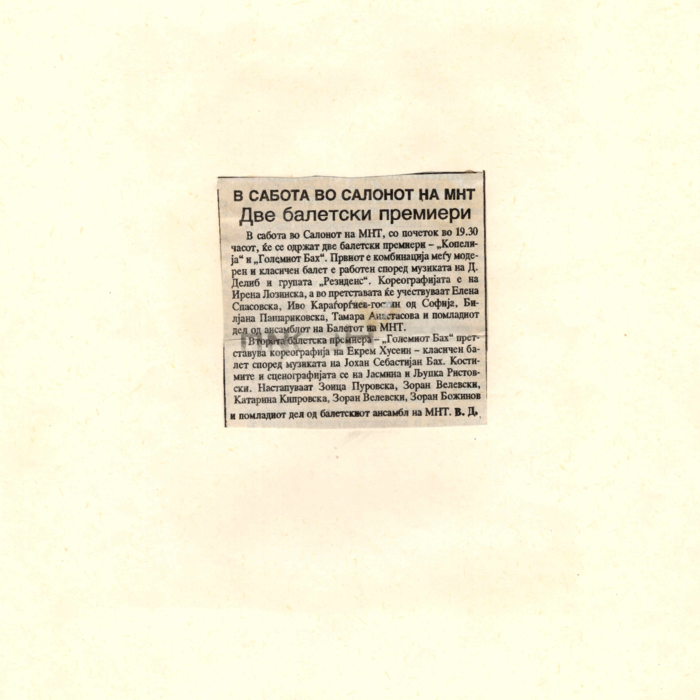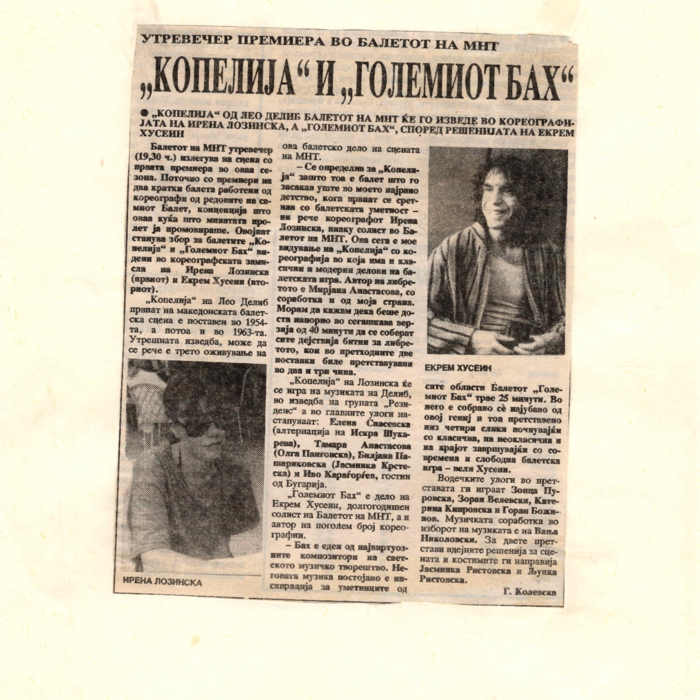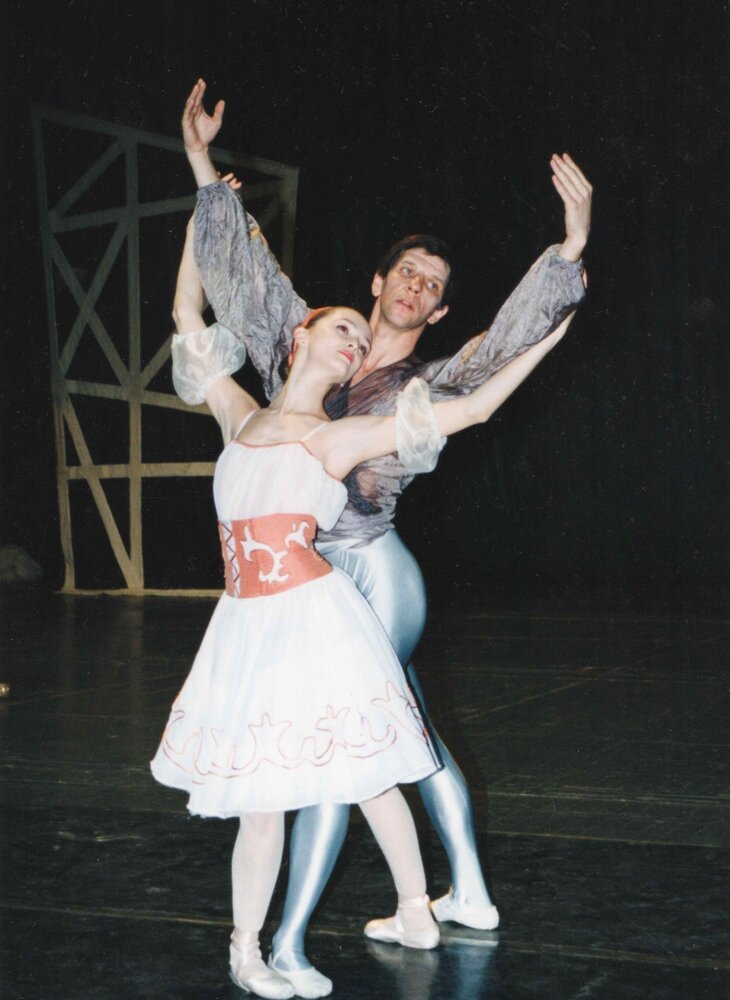
The new production by choreographer Irena Lozinska introduces significant changes to the presentation of this ballet. In addition to the music of Léo Delibes, the score incorporates music by the English experimental group The Residents, creating a contemporary reinterpretation of both the choreography and the libretto through the expansion and further development of the central motif—the animation of an automaton doll.
Complementing Lozinska's original choreography, created in a neoclassical and contemporary style, are several newly introduced characters. Among them is Fanny Fantasy, who first appears as Swanilda's imaginary companion, then emerges as Coppelius's vision, subsequently materializes as the mechanical doll Coppélia, becomes Franz's erotic dream, and ultimately comes to life as Pygmalion's Galatea in the hands of Coppelius, set in an imagined future. The expanded concept emphasizes, on the one hand, humanity's desire to bring a robotic doll to life, and on the other, the increasing automation of human beings—a phenomenon that has become ever more present both in literature and in contemporary society.
The ballet unfolds in five scenes, spanning the past, the present, and the future. Condensed into a 40-minute performance, the production presents a considerable artistic and technical challenge for the choreographer, set designer, playwright, and director alike. Thanks to the dedication, creativity, and close collaboration of the entire artistic team, however, this new interpretation of Coppélia has achieved its final artistic realization.