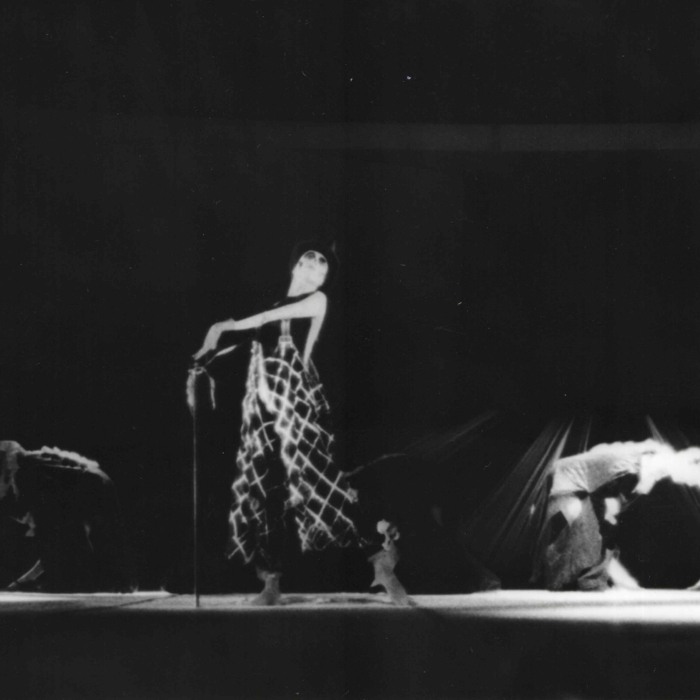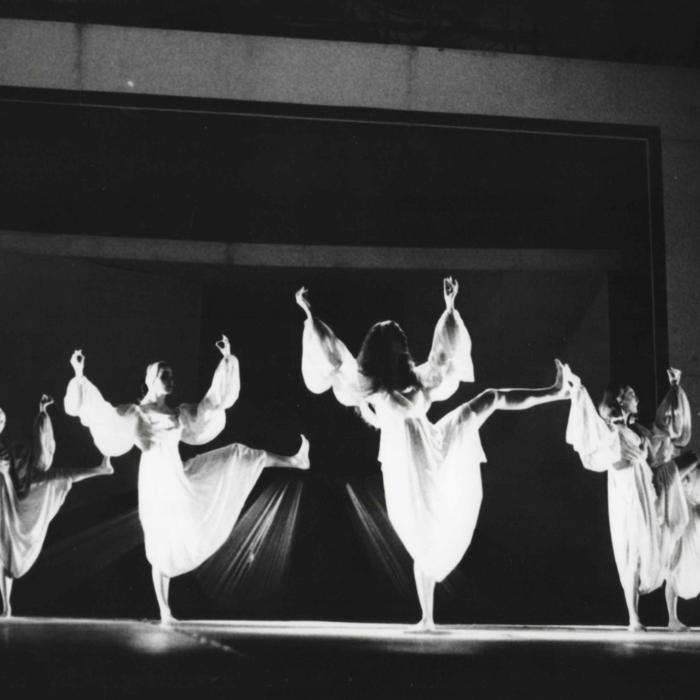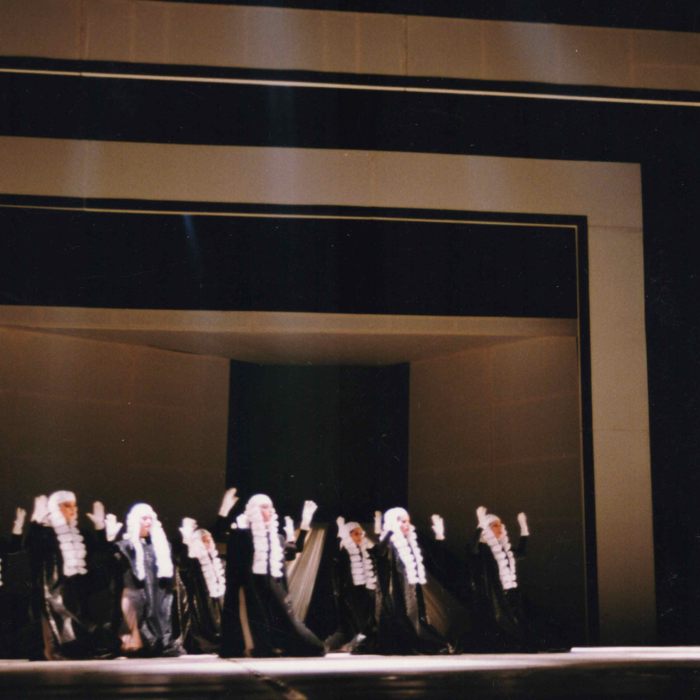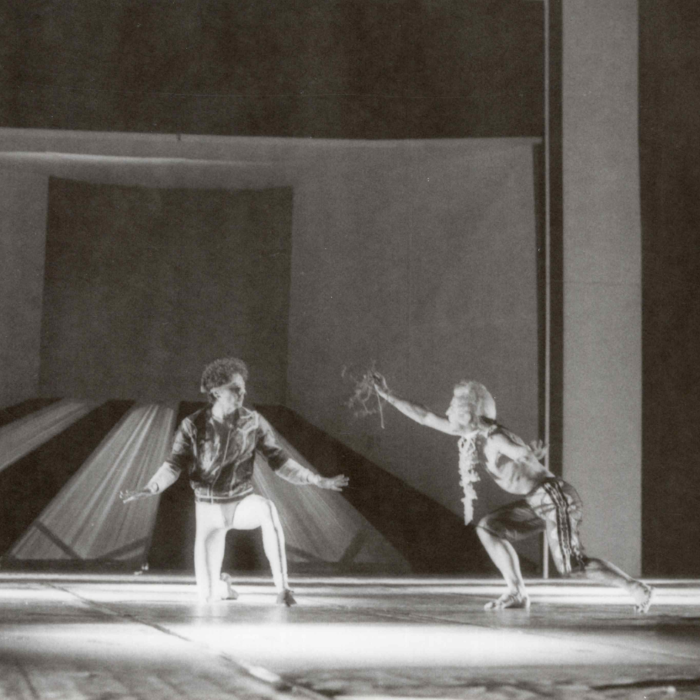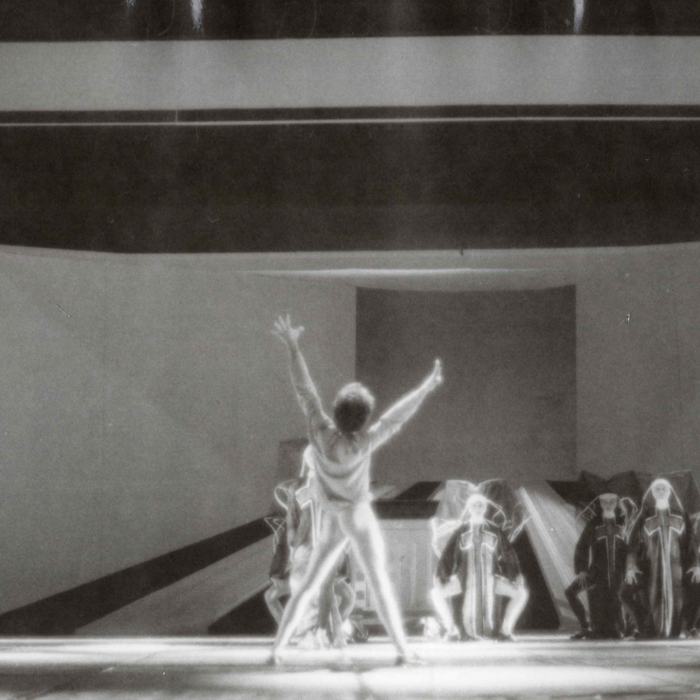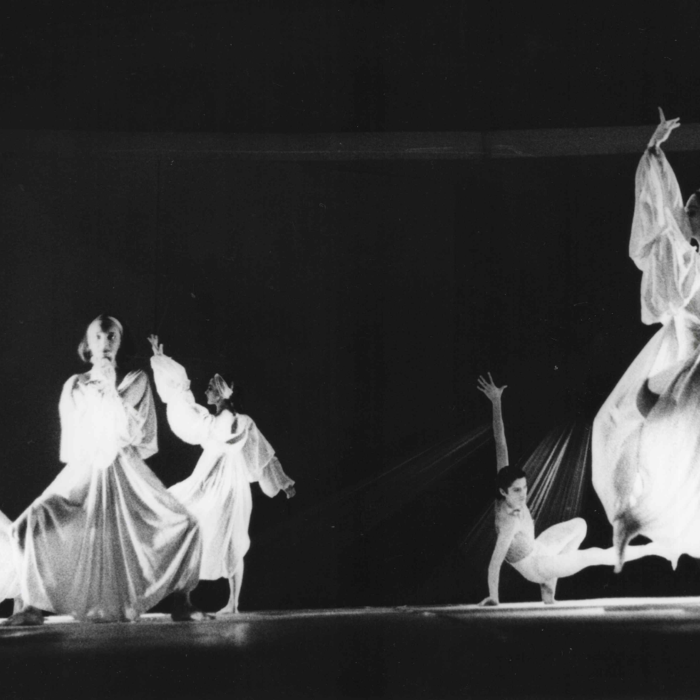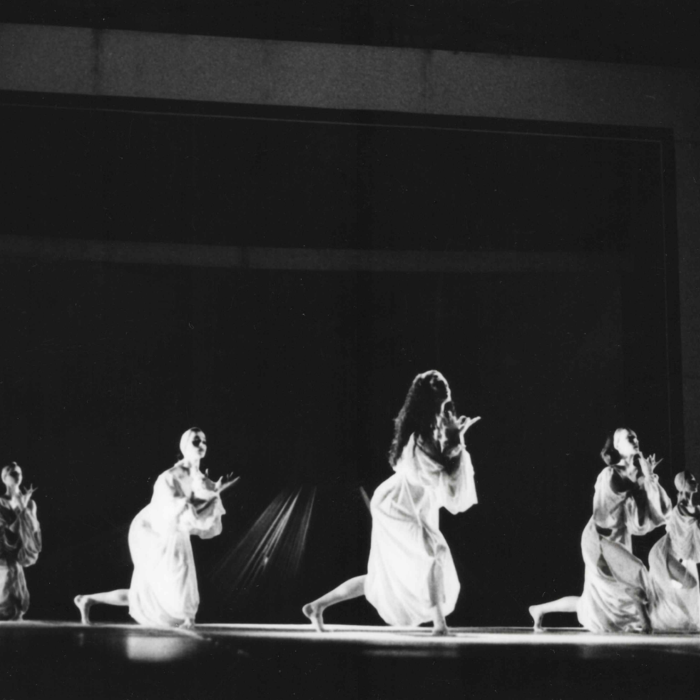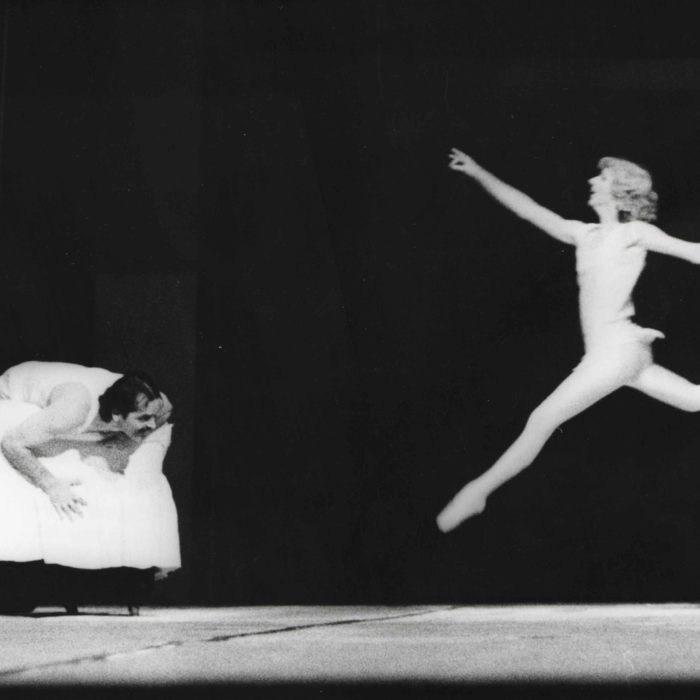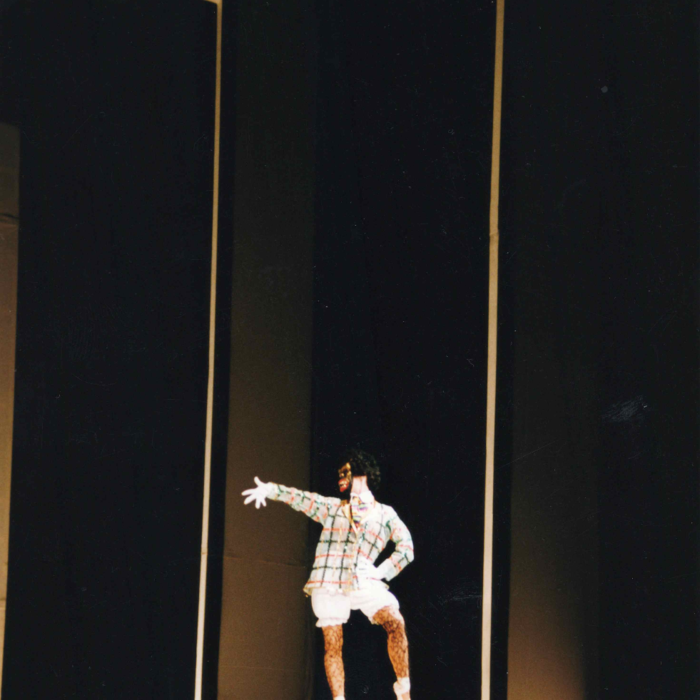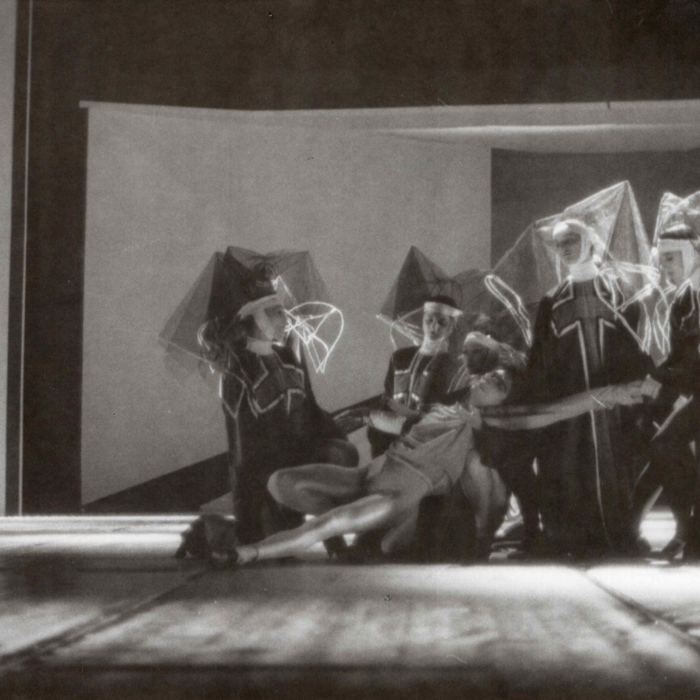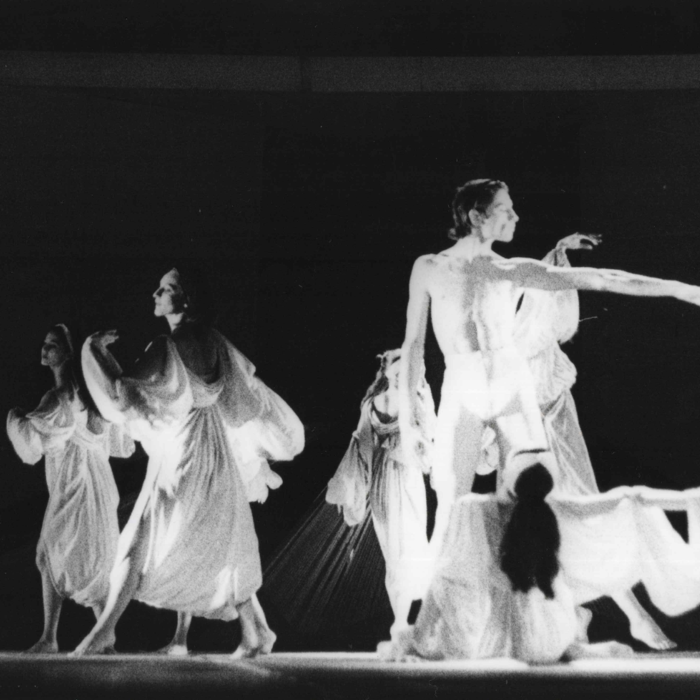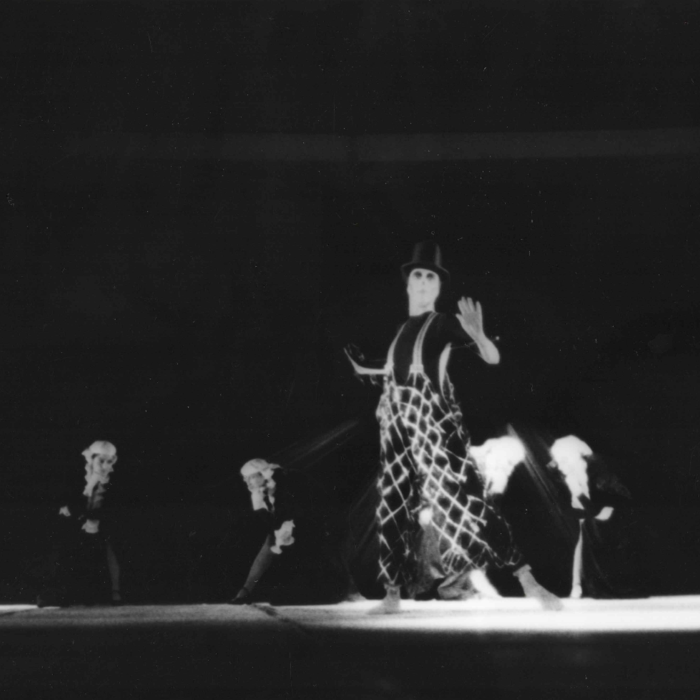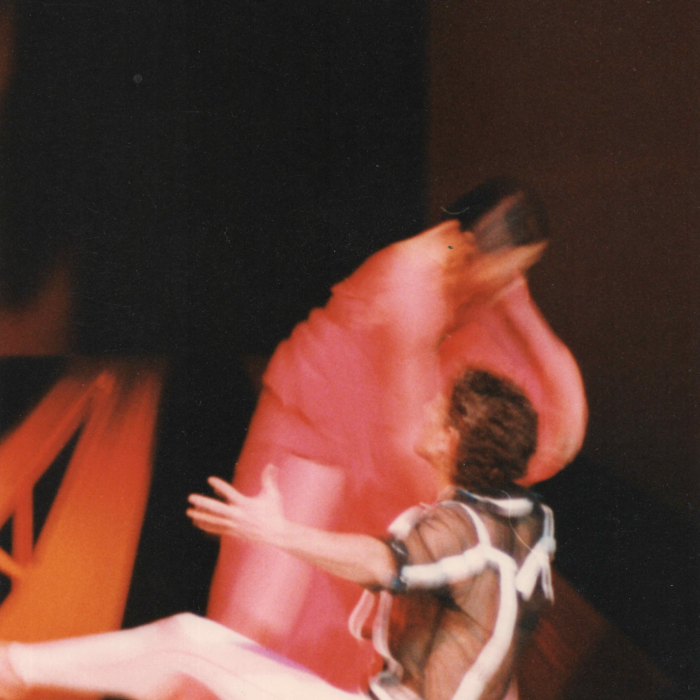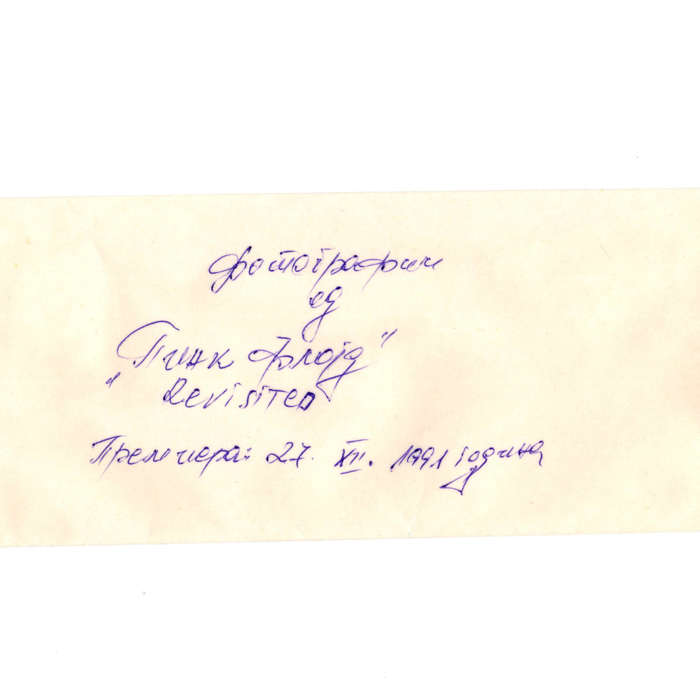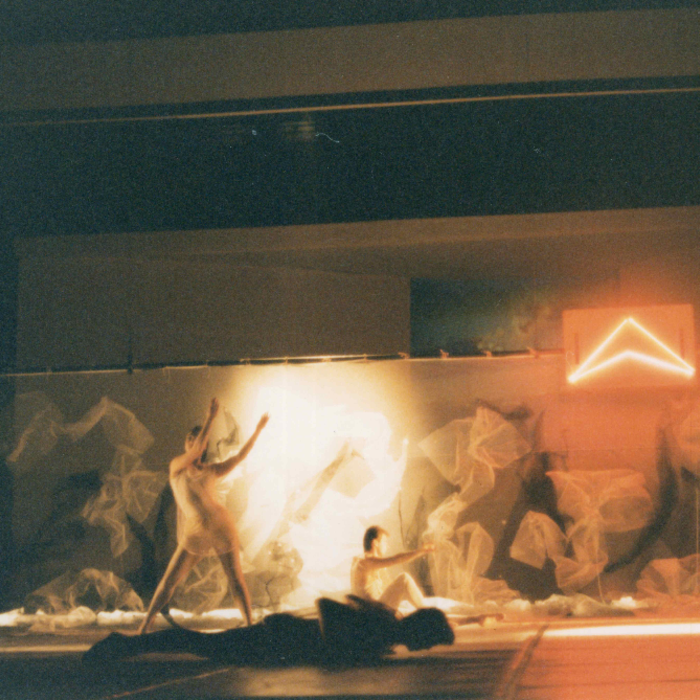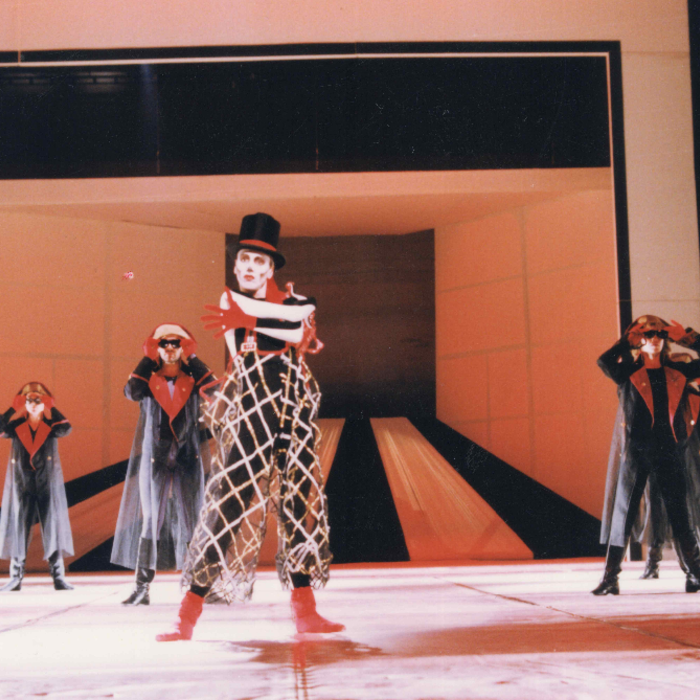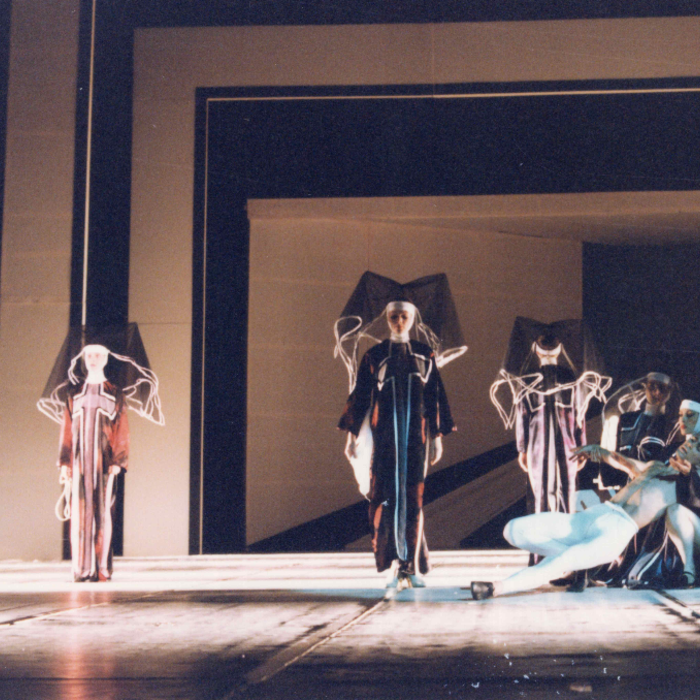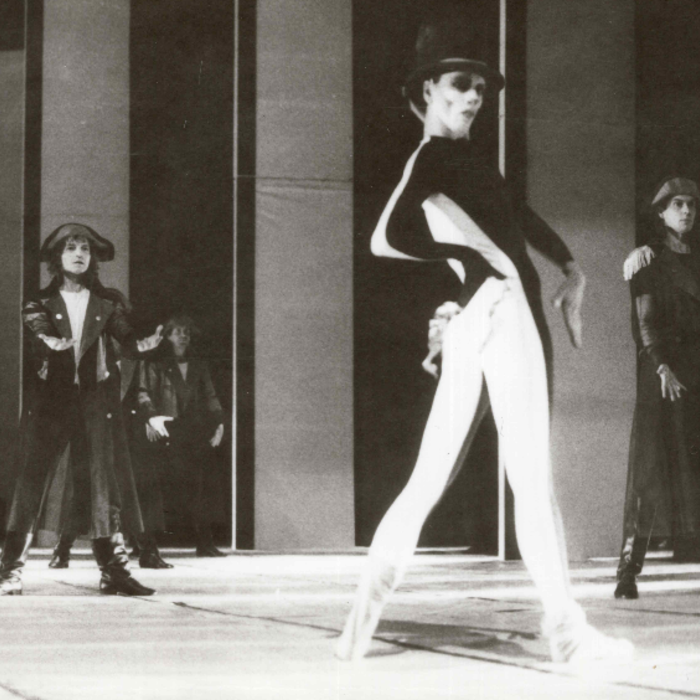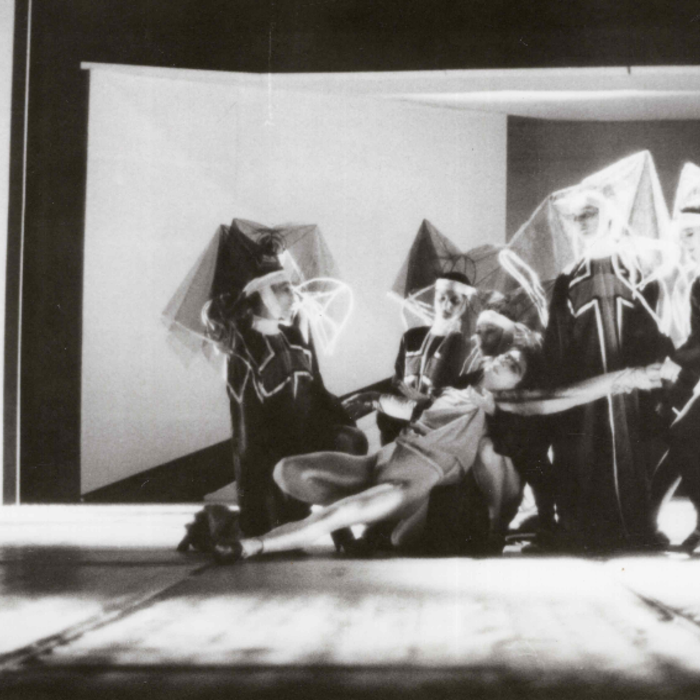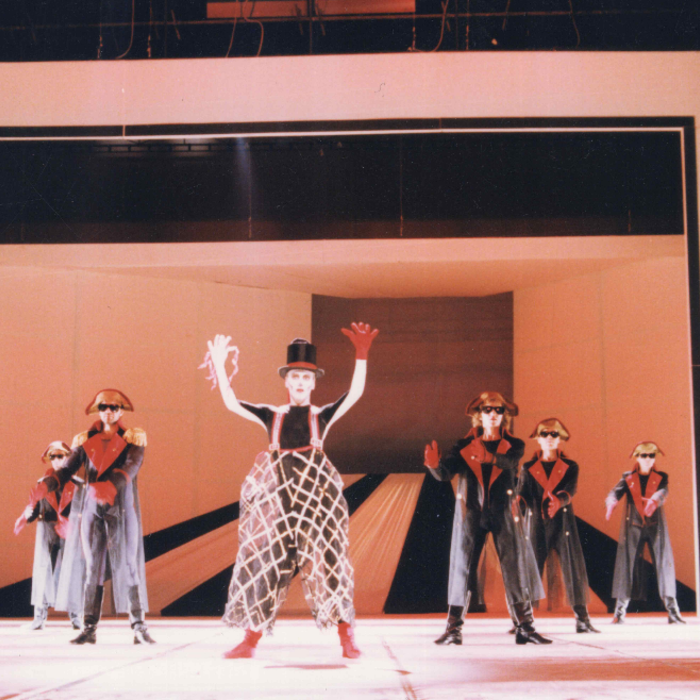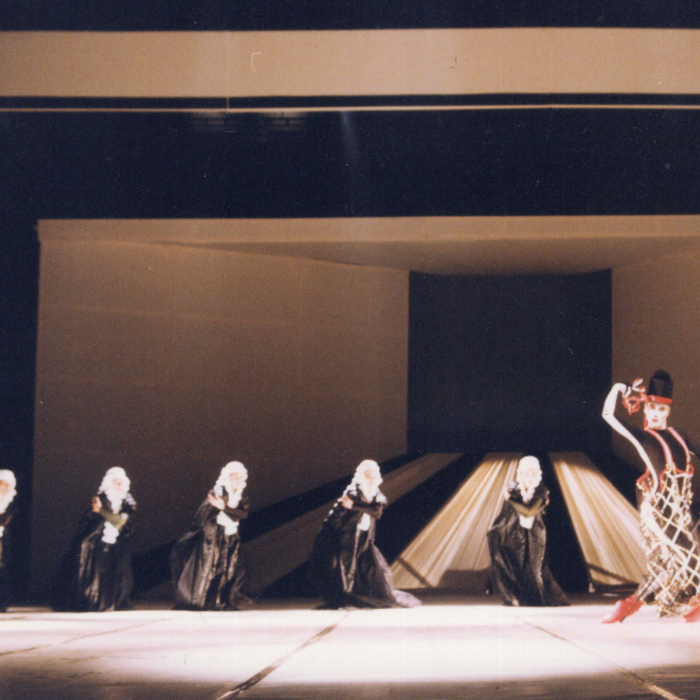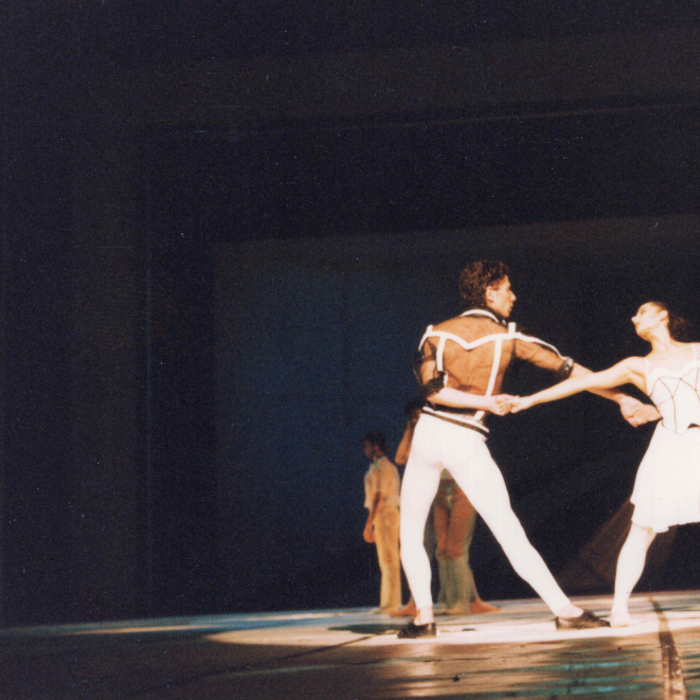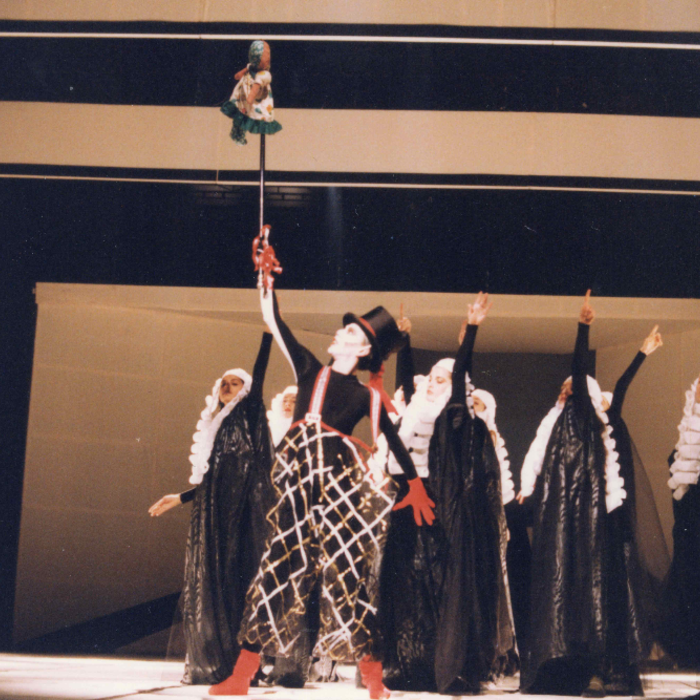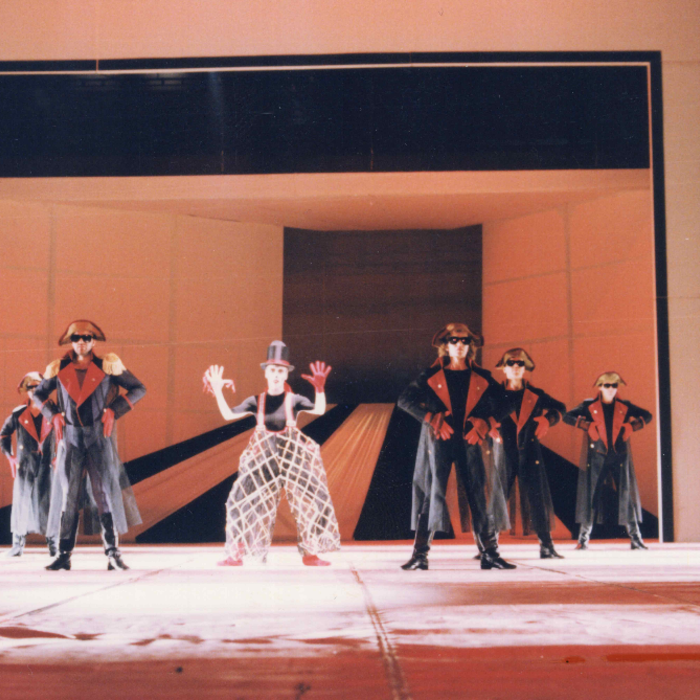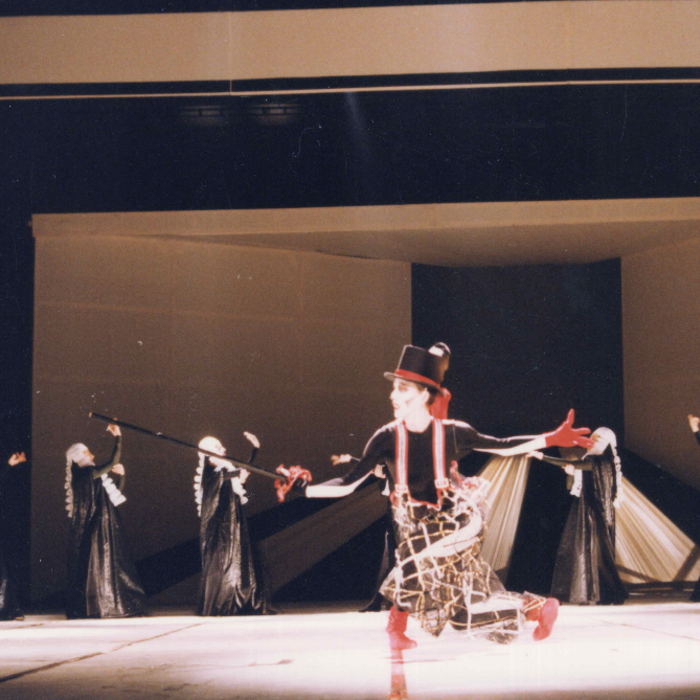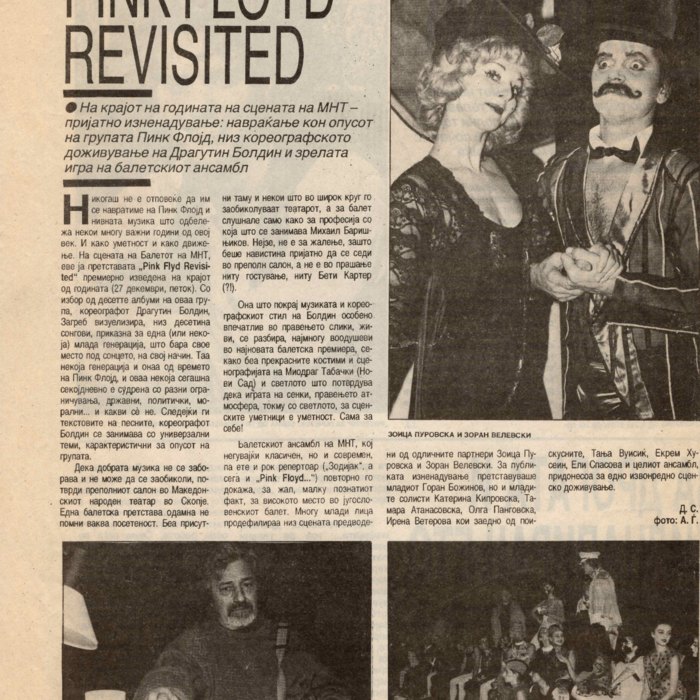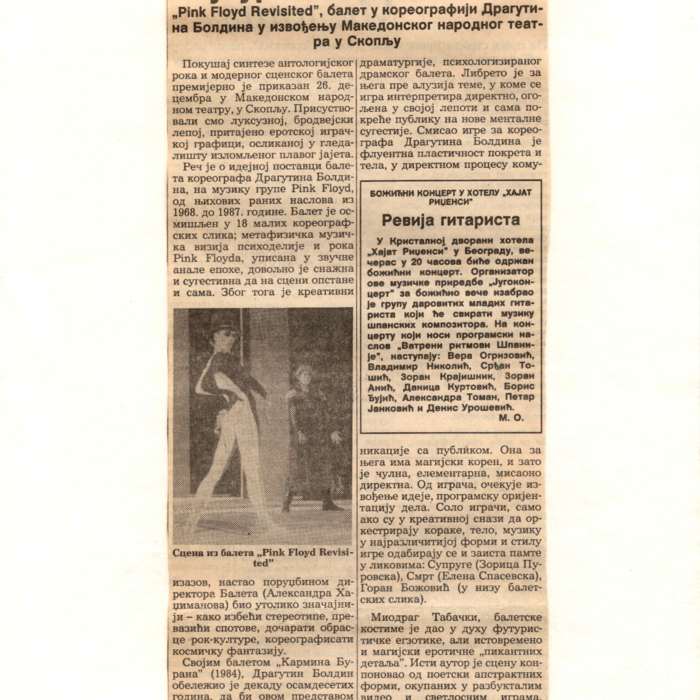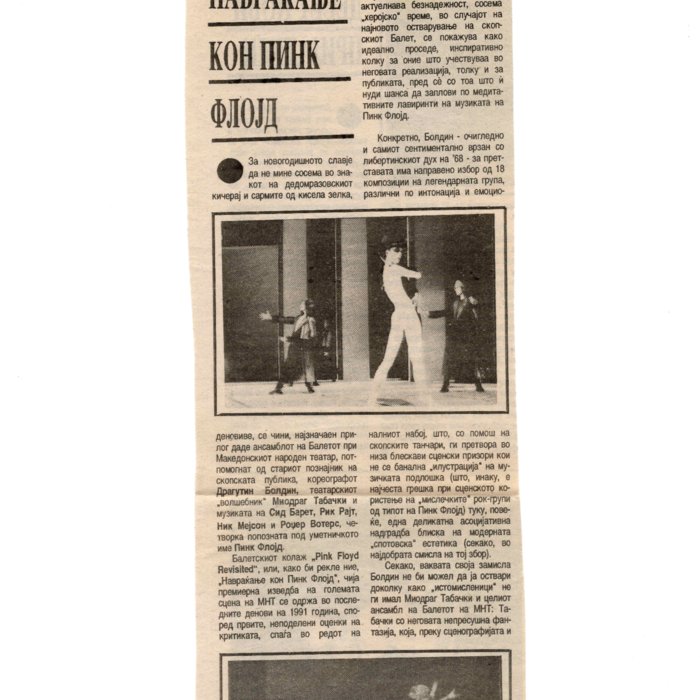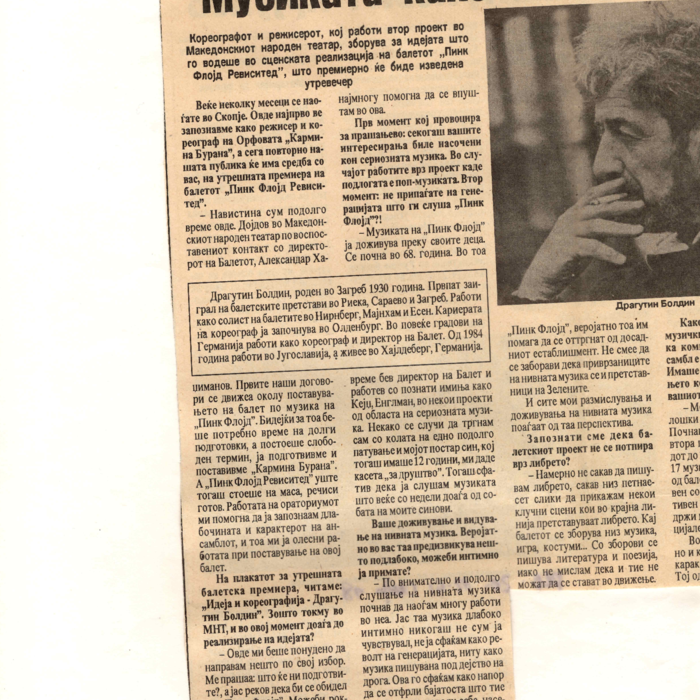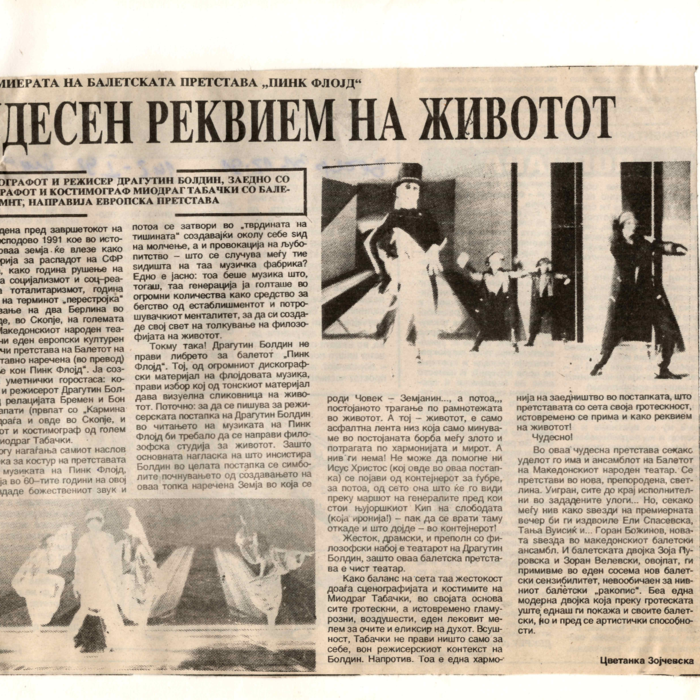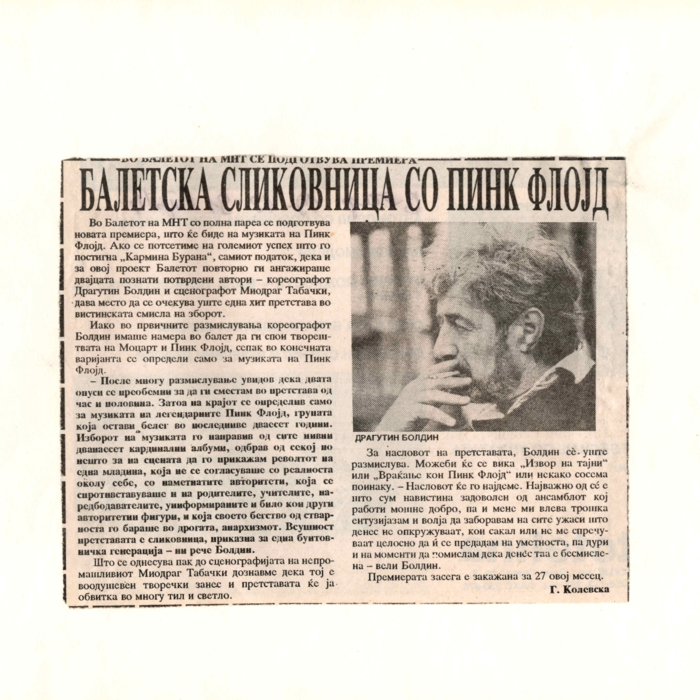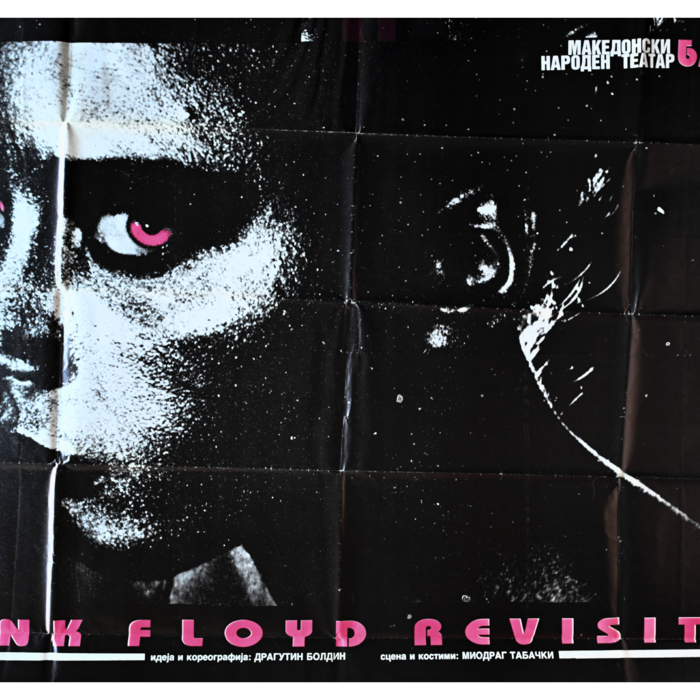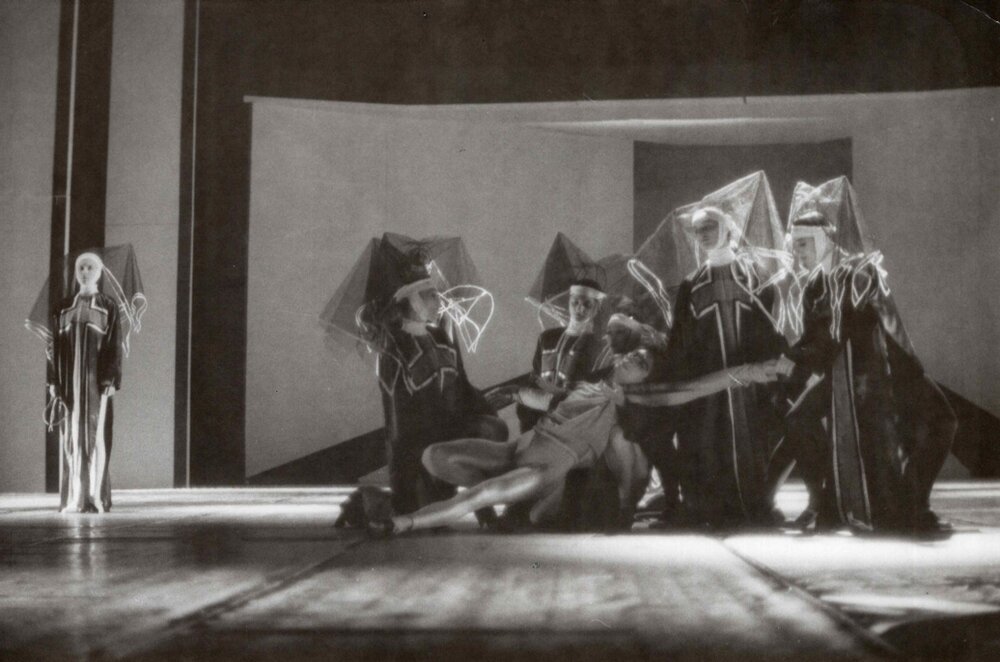
I find myself in conflict with my own thoughts when attempting to express in words something that could be called a “libretto.” What can be communicated through dance is entirely different from what we seek to express through language. Dance has always seemed to me to be closer to sculpture and painting. This does not mean that poetry and literature cannot be expressed through dance; rather, in such creative processes we strive for something beyond the narration of literary works, for if storytelling alone were the objective, animation would be better suited to that purpose.
For this reason, Pink Floyd has no libretto.
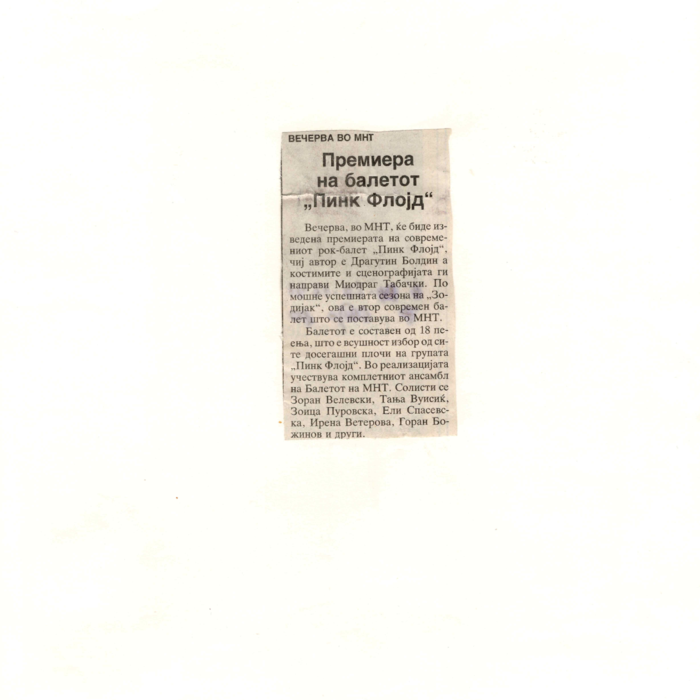
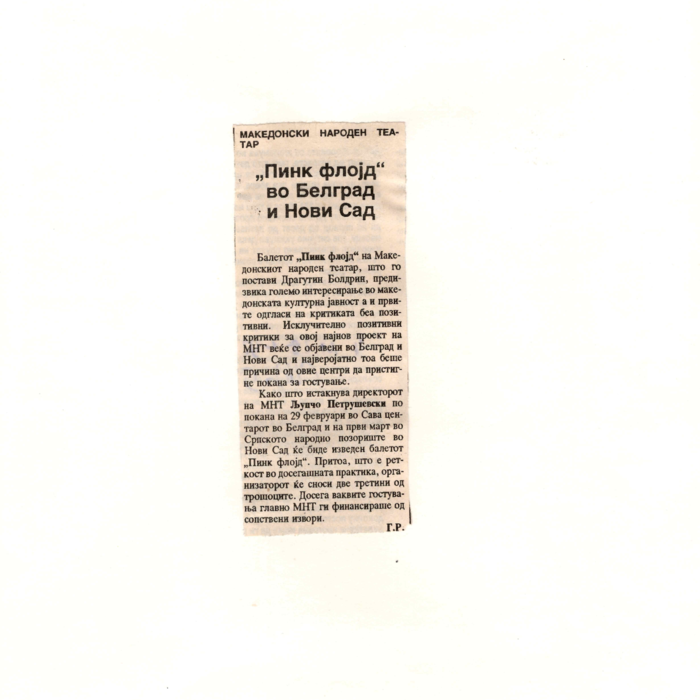
When we decided to create a “ballet” to the music of Pink Floyd, it was clear to me that I could approach the work only from the perspective of the generation of 1968—that is, through the way I experienced those years in Heidelberg. In essence, it became a search through memory.
I owe my first encounter with Pink Floyd to my sons. While I was in my study listening to what I considered “serious” modern music, they were in their rooms listening to Pink Floyd. Some of that music inevitably reached my ears, and from time to time they would slip a cassette into my car, accompanied by a note that read: “Dad, perhaps this will lead you to some different thoughts.”
As I listened, I reflected on a generation I did not fully understand, on their music—which at the time I did not even regard as music—their worldview, and their way of socializing. I thought about my two sons, who would spend entire nights at marathon concerts, carrying sleeping bags with them.
Gradually, I came to understand that this was a generation striving to break away from the establishment—a generation that felt lost within an emotionally, rather than merely materially, impoverished consumer society, and that, in searching for an alternative, created its own musical culture. More than that, it developed its own philosophy and worldview. (I believe that a large part of this generation later gave rise to the Green movement.)
They gradually became close to me. Although I was never able to identify with them completely, I came to realize that the image of the world they perceived as grotesque was, in truth, no more grotesque than reality itself.
Those memories became the foundation of my own search during the creation of this production. My initial selection consisted of twelve records. Through a process of reduction, I gradually narrowed the choice while trying to preserve a chronological sequence, eventually arriving at a form that, under the given circumstances, I felt could sustain a theatrical performance. The final selection, which emerged during the creative process itself, was ultimately shaped by the stage and by the characters, which, quite unexpectedly, began to define themselves.
— Dragutin Boldin