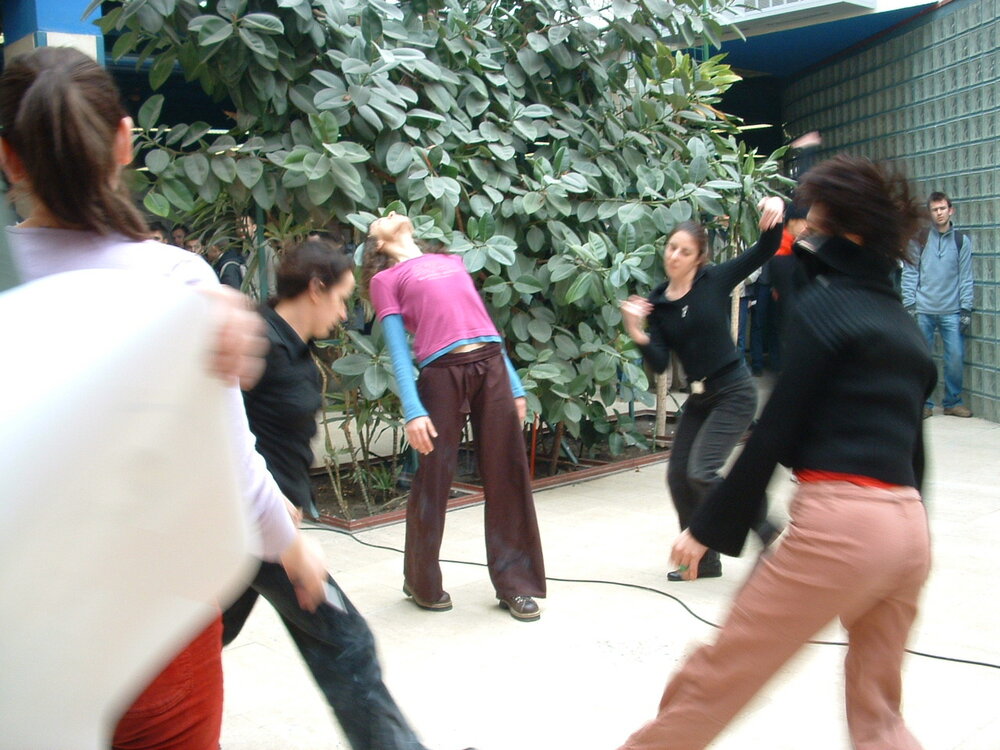
Experimental Free Scene (EkS-scena, 2001–)
Experimental Free Scene or EkS-scena was a self-organized initiative with an open organizational model that involved horizontal decision-making and sharing responsibility. It was founded to promote and affirm contemporary dance and other performing arts forms and developed projects focused on dance education and building connections between the Croatian dance community and the European scene. This initiative emerged as a response to the lack of structured education and spaces (centres, theatres) for performing arts and dance at that time, addressing a critical gap in the field. The coordination team consisted of Selma Banich, Sandra Banić, Silvia Marchig, Maja Marijančić, Željka Sančanin, Zrinka Užbinec and Petra Zanki bringing feminist perspectives of care and solidarity into the centre of their work. The initiative had numerous programs: Epds programme (dance training and workshops), Frappe Programme (lectures, projections and discussions), Collegii Saltati (theory lectures, projections and discussions), Arp Programme (Artists-in-Residence), Warp (Evenings of authorial works and performances) and Triathlon (a collaborative project between Croatia, France, and Germany in the field of contemporary dance and movement theatre), Sofa jammings (improvisation and dancing in public and non-theatre spaces), In situ (dance and video media), π rooms (a multimedia project with lectures, projections and improvisations). EkS-scena is known for supporting a broad range of contemporary dance work through its presentation formats regardless of aesthetics. Additionally, it has fostered ongoing dialogue within the dance community, helping to identify and address its needs and promote dance activism. In 2006, the last year before transformation in its working methods and organizational structure, EkS-scena included 6 program coordinators, 13 art organizations/independent artists and 17 pedagogues.

