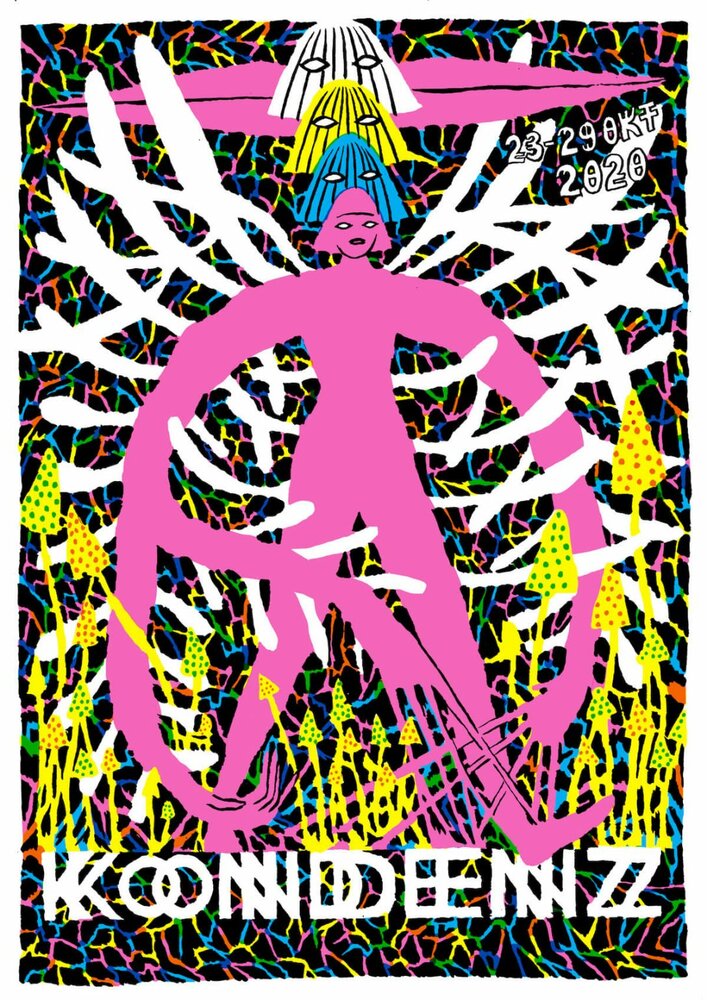
This year’s festival emerges in new circumstances, in the so-called “new normality” of the COVID-19 era, which is difficult, almost impossible to define — it is fluid, mutates like the virus, contradictory like the information surrounding the pandemic, elusive, and tends to paralyze, passiveize, confuse, frighten, and depress. Despite this, Kondenz remains consistent this year as well in the way it is conceived and produced.
The projection of the festival program in a year in which everything has become “uncertain,” questionable in its resilience to drastically changed production conditions, has once again emerged as a collective work addressing its own context with the desire to help it survive and remain present under such circumstances. Through collective curating based on the principles of sharing available resources (knowledge, social connections, space, finances, media space, etc.) for collective benefit, we activate concepts that characterize the work of this festival and Stanica’s projects: collectivity, community, criticality, and conceptualization (or, as Bojana Cvejić put it: “a few ‘c-terms’: collectivity, community, criticality and conceptualisation”, 2005).
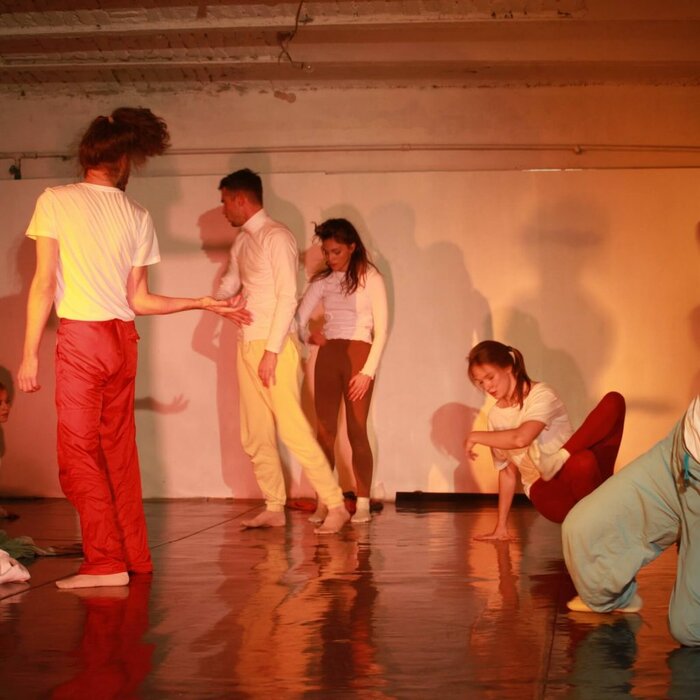
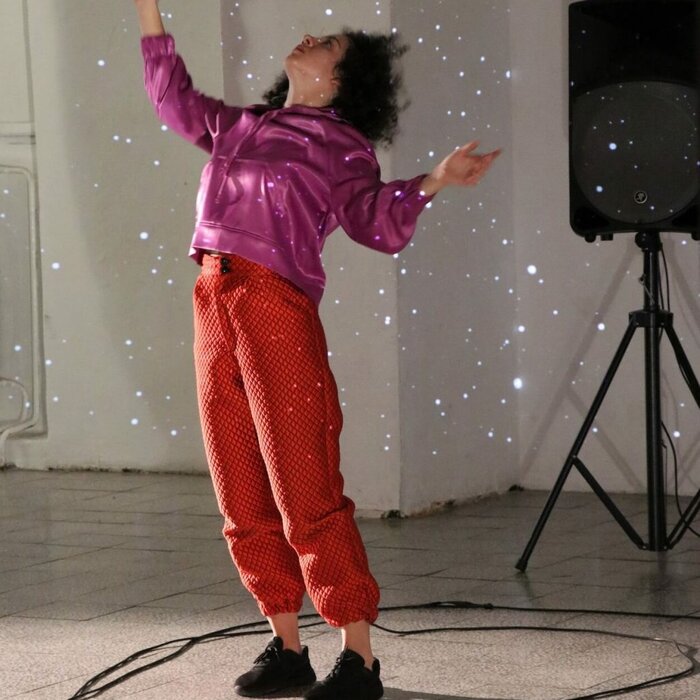
Once again, we are creating a temporary environment called Kondenz that provides space for works by local authors and artists to present their performances, ideas, and experiments. The program includes all works created over the past year and a half that have not had significant visibility in our environment, and which most directly point to the diversity of artistic expression in the fields of dance, choreography, and performance. We particularly emphasize that all these works were created as independent artistic productions with rare institutional support (Lounli plenet has the support of a city theater because it is part of its repertoire), making the practice through which independent dance production has for years been systematically obstructed and restricted (through the distribution of funds in public calls, the absence of other measures encouraging dance creation, and the disregard of dance artists’ authorship by theaters) even more dangerous.
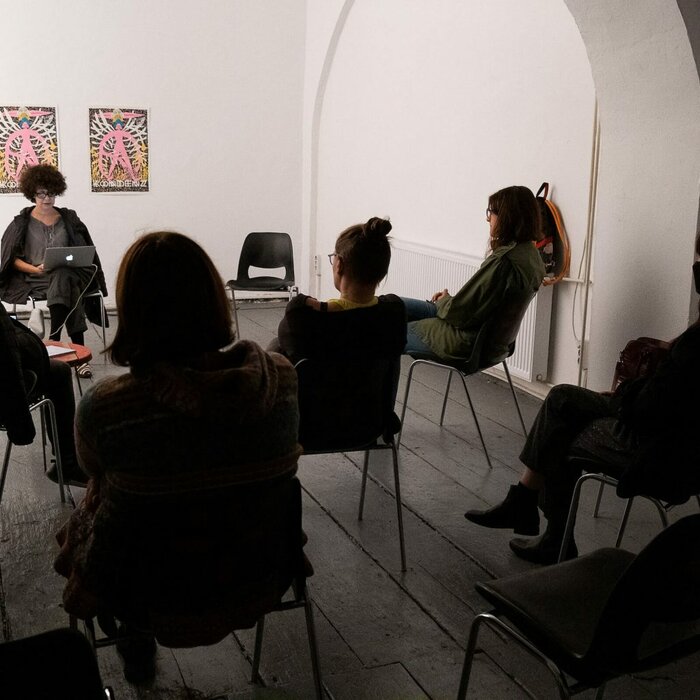
What sets off alarm bells is the fact that all of us, globally connected, have found ourselves in a crisis after which there is no return to the old ways. The effects of the Anthropocene are materializing before our eyes as a series of crises in which the survival of the natural world is becoming uncertain. We believe that both the art world and the field of culture are responsible for possible future forms of behavior within our communities and must serve as platforms for critical reflection on the world that needs to be created. Therefore, as an additional form of dialogue with artists and audiences, we will offer discursive programs — lectures and conversations addressing the themes of the Anthropocene, the place and role of performance in a changed social and political context, and modes of production in the art world.
In curating this year’s program, we played with the mantra love-what-you-do, with the intention of using it as a framework through which to observe the conditions of artistic production and labor, but also to address the exploitation of love and its accompanying concepts both in art and in the household, both in pop culture and in everyday life. While struggling to realize imposed standards, professional and emotional alike, choking in multitasking, conditioned by what is called love, disciplined working bodies through the historical criminalization of idleness and unemployment, we have no time to stop and turn everything upside down. We have no time to perceive the boundaries between perfectionism, love, and (self-)exploitation. We have no time to deal with the traces and consequences that such ways of working and living leave on the scene, collectives, communities, and people.
Love-what-you-do is not a new phrase; it has long been used in different contexts. However, within the neoliberal vocabulary it has acquired new interpretations and (mis)uses. On the one hand, it dehumanizes the majority of the population who work out of necessity rather than “love,” while on the other it represents the driving fuel for the (self-)exploitation taking place within the freelance labor characteristic of the fields of art and culture.
Professions that hold a special status in society, considered a special kind of work with elevated goals and qualities — such as work in art and culture, academic labor, activism, and similar fields — bring certain privileges, but are simultaneously marked by precarity, whose harmful effects on human lives are obscured by ideas of so-called freedom, flexibility, and work done out of “love.” Precarious working conditions unite 99% of people on the planet and are characterized, among other things, by constant uncertainty, living perpetually between employment and unemployment, the impossibility of planning for the future, continuous stress, and fear for one’s existence — all factors affecting people’s physical and mental health, quality of life, and lifespan.
In the field of art, due to the notion of the exceptional nature of artistic labor, a distance is established from wage labor, enabling the exploitation upon which art institutions rest. In reality, among those engaged in these professions there are class differences reflecting class differences in society, obscured by the idea of an exciting lifestyle and creative work, yet often decisive in choosing working conditions and methods, in development and advancement in multiple senses, and in the conditions of producing and exhibiting work.
The year 2020 made even more visible the extent to which precarity endangers people’s lives, revealing that behind every kind of work, including artistic labor, there exists another form of “labor of love” in the shape of invisible unpaid domestic and reproductive work, which during lockdown had to continue despite everything else seemingly coming to a halt. The division between essential and non-essential jobs further marked class, racial, and gender differences around the world, while questions of care briefly entered the spotlight, primarily through issues connected to children’s education from home and the high mortality rates in gerontological centers.
Under such conditions, the mantra love-what-you-do momentarily became irrelevant; all jobs not labeled essential briefly lost their meaning. That moment was short-lived. Very quickly, through the internet, social media, and online platforms, we were once again consuming content through monitors and screens. Exhibitions, performances, installations, dance floors, scenographies, costumes — everything was transferred into online form, because live love became forbidden under the new conditions of the pandemic.
But what happens when love is prohibited by epidemiological protection measures? When the necessary distance between our bodies questions/dictates the openness of our hearts? If our bodies in 2020 have become two meters larger in radius, what do our encounters look like? If online reality takes the lead, what new things do we learn about the encounter between artists and audiences through live performance? If travel has also become difficult, how do we continue building the transnational dance scene that is a necessity, an important source, and support for our dance? If we increasingly receive messages that artistic professions are not among the most important occupations in 2020, how do we cope with our own feelings of the worthlessness of what we do? How do we care for one another, for the world around us, when we are all burdened by the stress of the present and an uncertain future? At a time when the entire world watched the footage of the brutal murder of George Floyd, when migrants drown in the Mediterranean and die in the Balkans, at a time when there was not a major city on the planet without demonstrations… what “normality” are we leaving behind, and what new one are we creating? And what is the dance that all of us need in 2020?
Capital accumulation, although producing at increasing speed, kills even faster through excess, violence, and the exploitation of everything available to it — and everything unavailable as well. Love paradoxically belongs to the range of concepts that power this necrotic machine. The labor of “love” sustains a world simultaneously collapsing under the weight of its own activities; it is exhausting, intense, ideologically masked, and trapped in a vicious circle, working against itself while sustaining an entire chain of activities hysterically driving us toward catastrophe.
Humanity is finally beginning to realize that the entire living and non-living world is caught in the deadly jaws of the human species — ourselves. The newly installed clock in Manhattan reminds us that we have only seven years left to try to save the Earth from total ecological catastrophe. An anti-anthropocentric view of society and the world demands that we reconsider the very postulates of thought, ethics, philosophy, art, and being together.
Let’s talk about new models of production, about new paradigms of creation and exchange, about different dimensions of intimacy and need, about corporeality, sharing, and joy.
Let’s talk about love that is not an empty spectacle, a screen for the exploitation of everything and everyone.
A new mantra: love can and must be different.
Ana Dubljević, Mirjana Dragosavljević, Marijana Cvetković