When I began writing the suite Trains, I had in mind the year 1985 — the 300th anniversary of the birth of the great Johann Sebastian Bach and the European Year of Music. Soon, however, the musical material itself demanded that I include certain sections in the suite (passacaglia, fugue, canon) that are not typical of the formal structure of Bach’s suites, and, at the same time, omit others (the courante) that did not correspond to the internal dynamics of the entire composition.
Thus, Bach and the Baroque suite became sparks of encouragement and inspiration that initiated the creative process. Naturally, it was necessary to find a method for conveying the original idea. In this way, the following elements were born: the specific motoric character of the toccata, the schematic structure of the canon, the linguistic characteristics of the allemande, sarabande, and gigue, sublimated through the intervallic and harmonic movements found in Bach’s music, as well as the formal structures of the fugue, passacaglia, the system of doubles in the dances, and so forth.
Although the synthesizer and 24-channel recording technology enabled me to break through into certain new and unpredictable realms, the question of live performance remained. Its impossibility led to another artistic quality — the visualization of completed music.
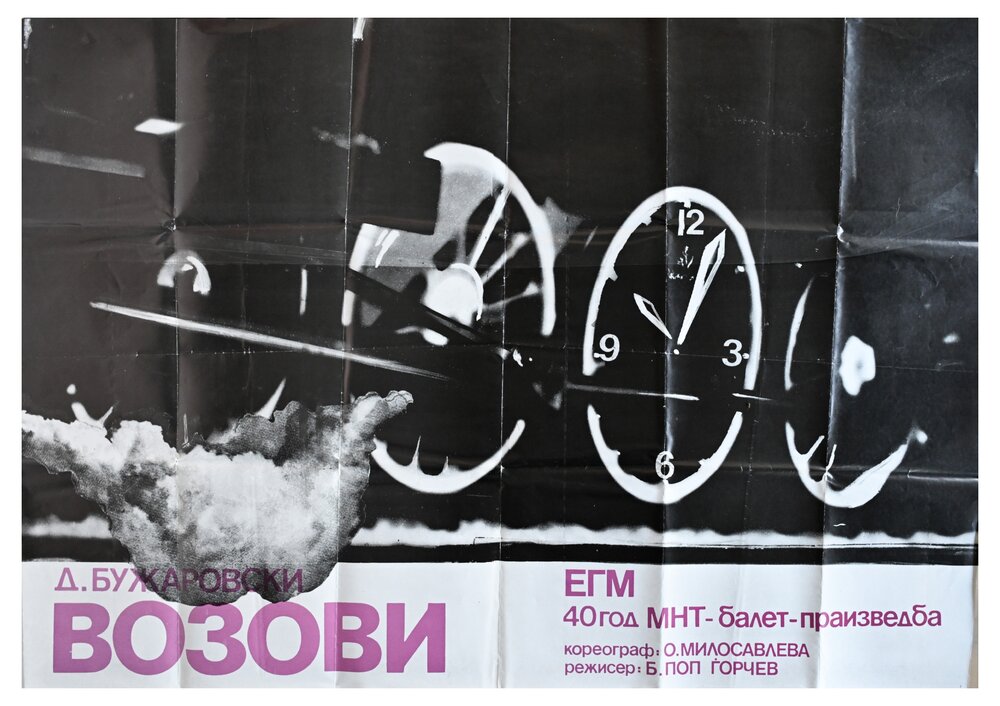
From my childhood, the railway station was a place that fascinated me. It was connected with the excitement of new discoveries and encounters; it was a crossroads of many personal destinies; its permanence, solidity, and timelessness were constantly in conflict with the countless events that flowed through it and accelerated with the trains arriving and departing.
The motoric character of the toccata was the first association with this idea. After that, it was no longer difficult to create for each part of the suite its own content, its own event, its own destiny.
— Dimitrije Bužarovski